If you are home shopping in Central Berkeley, the style of house you choose can shape your daily life as much as the address itself. In this part of Berkeley, you are often choosing between older character homes and newer, more compact infill options, each with a different set of benefits and trade-offs. Understanding what those styles usually mean can help you match your budget, lifestyle, and long-term plans to the right property. Let’s dive in.
Why home style matters in Central Berkeley
Central Berkeley is a built-out flatland area, roughly described in city redistricting material as the area between Hearst and Dwight and Sacramento and MLK. That means most buyers are not choosing from large new subdivisions. Instead, you are more likely to see existing homes, updated older properties, and small-scale redevelopment.
That built-out pattern affects what is on the market and what you can do with a property later. A home's style is not just about looks. It can influence maintenance, outdoor space, floor plan, and how easy it may be to remodel or expand.
Another big part of the appeal is convenience. Downtown Berkeley BART is on Shattuck between Allston and Addison, with AC Transit service nearby, and BART notes its proximity to UC Berkeley, shops, restaurants, theaters, and other attractions. The Central Branch of the Berkeley Public Library is on Kittredge, and Ohlone Park stretches along Hearst with lawns, sports courts, a dog park, and access to the Ohlone Greenway.
Craftsman and bungalow homes
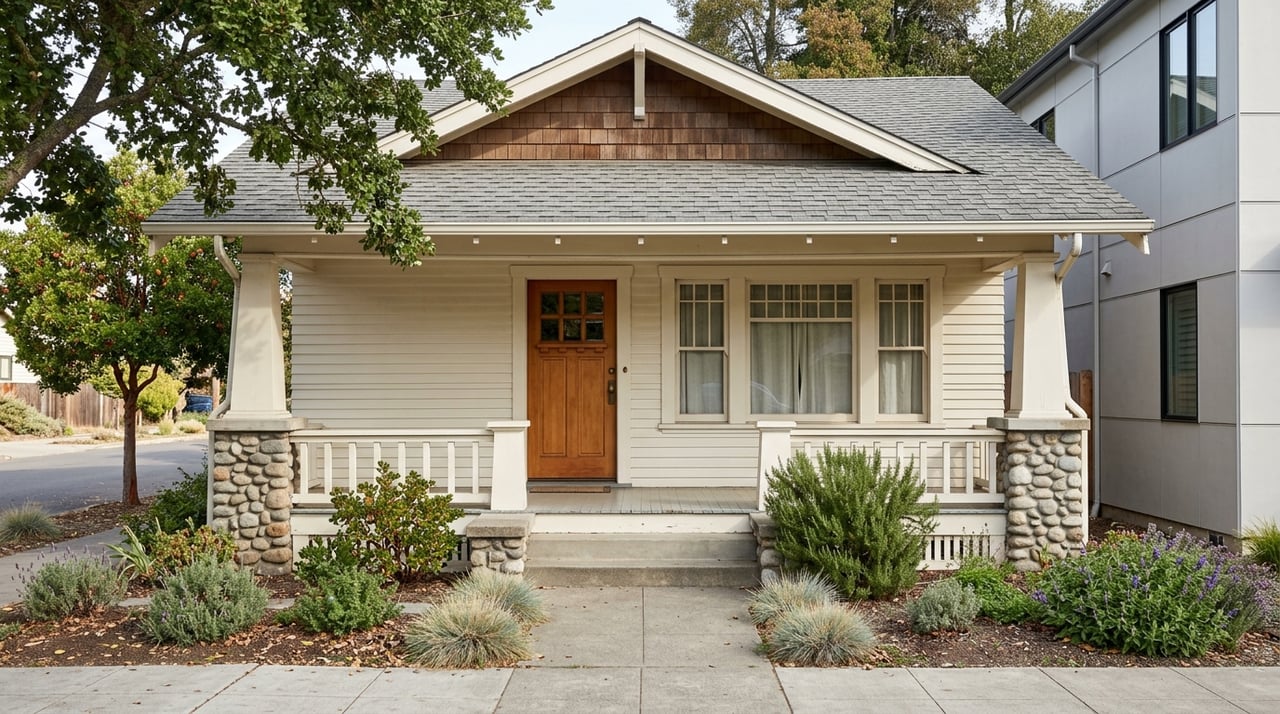
In Central Berkeley, many older homes reflect the Craftsman and bungalow era. In local preservation writing, those terms often overlap, so it is safest to think of them as closely related in everyday real estate use. These homes are often recognized by their low-pitched roofs, horizontal lines, front porches, exposed structural details, and wood or stucco exteriors.
Berkeley historic-resource materials note that the California Bungalow in the Bay Area was commonly a one- or one-and-a-half story house with a front porch. The style worked well with the region’s mild climate and lower-cost building traditions. For buyers today, that often means a home with charm, visible craftsmanship, and a more traditional layout.
What buyers often like
Many buyers are drawn to these homes because of their character. Front porches, original details, and a stronger indoor-outdoor connection can give the home a warm, lived-in feel that is hard to replicate in newer construction. You may also find compact but usable yards and floor plans that feel classic rather than highly modern.
These homes can also fit buyers who want a strong sense of Berkeley’s older residential fabric. If you picture porch time, mature streetscapes, and historic design details, this housing type may feel especially appealing. For many shoppers, the emotional connection is a major part of the value.
What buyers should watch closely
Older charm usually comes with more upkeep. Features like wood siding, trim, porches, older windows, exposed details, and historically sensitive materials can require repainting, repair, or careful replacement over time. That does not make these homes a bad choice, but it does mean you should budget for maintenance and look carefully at condition.
Permits also matter. Berkeley requires permits for many additions and exterior changes, and landmarked properties or structures of merit may require review by the Landmarks Preservation Commission and a Structural Alteration Permit. If you are buying for future renovation potential, it is smart to investigate those issues early.
Newer infill and compact housing
Central Berkeley also has newer infill and small-scale housing options. In a built-out city, newer homes often arrive through redevelopment, additions, or middle-housing projects rather than through large tracts of brand-new homes. That creates a very different buyer experience from shopping older bungalows.
Berkeley’s ADU standards took effect on November 9, 2023, and the city offers pre-approved ADU designs. The city’s Middle Housing rules took effect on November 1, 2025, apply to most residentially zoned parts of Berkeley, and allow certain two- to six-unit projects, such as duplexes, triplexes, fourplexes, and courtyard apartments, to be approved in 30 days if they meet city standards.
What buyers often like
For many buyers, the biggest advantage is efficiency. Newer infill homes often have layouts that make practical use of space and may involve fewer preservation-sensitive details to maintain. If you prefer a home that feels more streamlined and less ornamented, this type of property may be a better fit.
This style can also appeal if your top priority is living close to everyday amenities. In and around the downtown and BART core, Central Berkeley supports car-light routines thanks to transit, library access, park space, and nearby commercial destinations. Buyers who value convenience may be more open to smaller outdoor areas in exchange for a central location and a newer building.
What buyers should watch closely
The trade-off is usually lot use and outdoor space. Berkeley’s middle-housing rules cap lot coverage at 60 percent and require front and rear setbacks totaling at least 20 feet, so private outdoor space can be smaller than what you may find with an older single-home parcel. If a yard, porch, or garden is high on your wish list, compare that carefully when you tour.
You should also avoid assuming that newer or smaller-scale automatically means easy expansion. In Berkeley, zoning review, building permits, and in some cases landmark review can still affect future changes. Permit history and realistic expansion potential matter just as much as style.
How to choose the right fit
The best home style for you depends on how you want to live, not just what looks best in photos. A beautiful porch and vintage trim may be worth the upkeep for one buyer, while another may prefer a simpler, lower-maintenance setup with a more compact footprint. The right choice comes down to your priorities.
Here is a simple way to think about it:
- Choose Craftsman or bungalow homes if you value character, historic detail, porch life, and a stronger connection to Berkeley’s older residential fabric.
- Choose newer infill or compact housing if you prioritize lower-maintenance living, efficiency, and proximity to daily conveniences.
- Look deeper before you buy if you hope to add space later, build an ADU, or make major exterior changes.
Questions to ask before you make an offer
Once you narrow down a style, the next step is due diligence. In Central Berkeley, that means looking beyond staging and surface finishes. You want to understand how the home works today and what it may require tomorrow.
Ask questions like these during your home search:
- What is the property’s permit history?
- Is the home landmarked or listed as a structure of merit?
- Have exterior changes or additions been done with permits?
- If you want an addition or ADU later, what does current zoning allow?
- How much exterior maintenance should you expect in the next few years?
- Does the outdoor space match how you actually plan to live?
These questions can help you compare homes more clearly. They also help you avoid falling in love with a style that does not match your real budget, timeline, or plans.
What this means for buyers now
In Central Berkeley, home style is really about lifestyle trade-offs. Older Craftsman and bungalow homes often deliver charm, porches, and classic design, but they may ask more of you in maintenance and renovation planning. Newer infill homes can offer efficiency and simpler upkeep, but they may come with smaller outdoor areas and a more compact feel.
If you know what matters most to you from the start, your search gets easier. You can spend less time chasing every new listing and more time focusing on the homes that fit your day-to-day life and long-term goals. That kind of clarity can make a fast-moving market feel much more manageable.
If you want help comparing Central Berkeley home styles, understanding permit considerations, or planning your financing alongside your home search, E3 Realty can help you move forward with clarity.
FAQs
What home styles are common in Central Berkeley?
- Central Berkeley commonly includes older Craftsman and bungalow homes, along with newer infill and small-scale housing created through redevelopment and additions.
What do Craftsman and bungalow homes usually mean for Central Berkeley buyers?
- For Central Berkeley buyers, Craftsman and bungalow homes often mean more architectural character, front porches, and traditional layouts, along with more ongoing exterior maintenance.
What do newer infill homes usually mean for Central Berkeley buyers?
- For Central Berkeley buyers, newer infill homes often mean a newer, more efficient layout and fewer preservation-sensitive details, but sometimes smaller private outdoor space.
What should Central Berkeley buyers know about remodeling or adding space?
- Central Berkeley buyers should review permit history, zoning requirements, and possible landmark status before assuming an addition, exterior change, or ADU will be straightforward.
Does Central Berkeley support a walkable or car-light lifestyle?
- Yes. Around the downtown and BART core, Central Berkeley has transit access, library services, park space, and nearby commercial amenities that can support a car-light routine.